

SAVING AND PROTECTING ANIMALS. ONE LAW AT A TIME.
Instill Greater Compassion
Help Them Gain Rights & Respect
Make a Social Impact

Social Compassion 501(c)(3)

GIVING ANIMALS A VOICE

Social Compassion is our 501(c)(3) non-profit organization was founded in 2007 and focuses on instilling greater compassion throughout society by promoting the protection of all animals – Earth’s most vulnerable inhabitants – and the environment in which we all live. Through humane education programs, public service announcements, rapid response media campaigns, and support for spay and neuter programs throughout California and beyond, Social Compassion helps all beings gain the respect, rights, and health they deserve and need to thrive.

Social Compassion also acts as the incubator for research and development of various public policy objectives designed to protect animals and the environment. Conducting research to formulate strong public policy and engaging allies, stakeholders and impacted communities all take time and resources.

Social Compassion allows us to do this important work. A long road needs to be paved before we reach Sacramento, Washington, D.C. or key government agencies with legislation ideas. Once there, our sister organization, Social Compassion in Legislation advocates on behalf of those ideas and turns them into actual legislation … and eventually new laws.

All donations to Social Compassion, our 501(c)(3), are tax deductible. Social Compassion is the vehicle from which we drive all non-lobbying activities. 501(c)(3) include: setting up and running humane education programs, spay and neutering efforts, stakeholder alliance building, and media and public outreach to raise awareness, or to stop abuses to animals.

Select Social Compassion initiatives

Humane Education Head Start with heart & volunteers of America LOs Angeles

Social Compassion

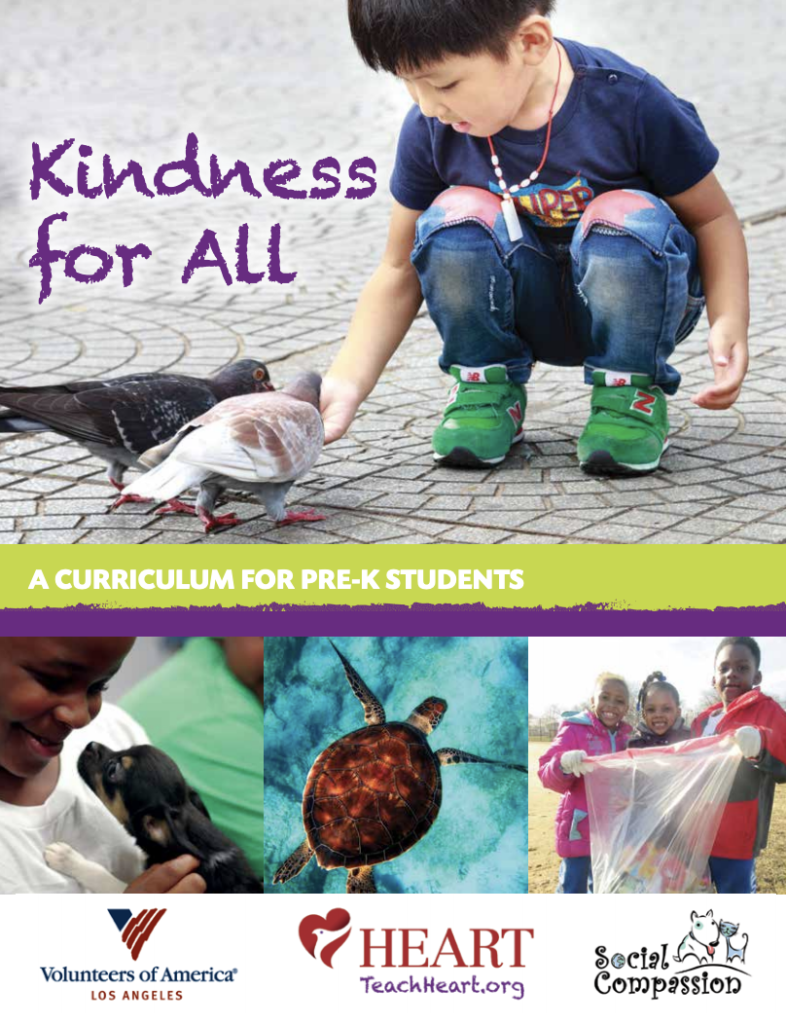
Kindness for All – Cirriculum for Pre-K Students

While we often expect children to treat others with kindness, knowing how to put their kindness into action is not necessarily something that comes easy to them. It can be challenging to take the needs and feelings of others into consideration when it is in conflict with our own wants and desires.

We as educators must help children learn about and practice living kindly. Consider professional athletes: no matter how talented they are, they still need to think about how they can improve their game and practice their craft so that they can perform at their best.

Likewise, we become kinder the more we think deeply about kindness & put it into action.