


| Prepared by | Social Compassion, a 501c3 organization founded in 2007 to instill greater compassion by promoting the protection of all animals. |
| Purpose | An ongoing professional-services partnership with the City of Los Angeles, administered by Los Angeles Animal Services. |
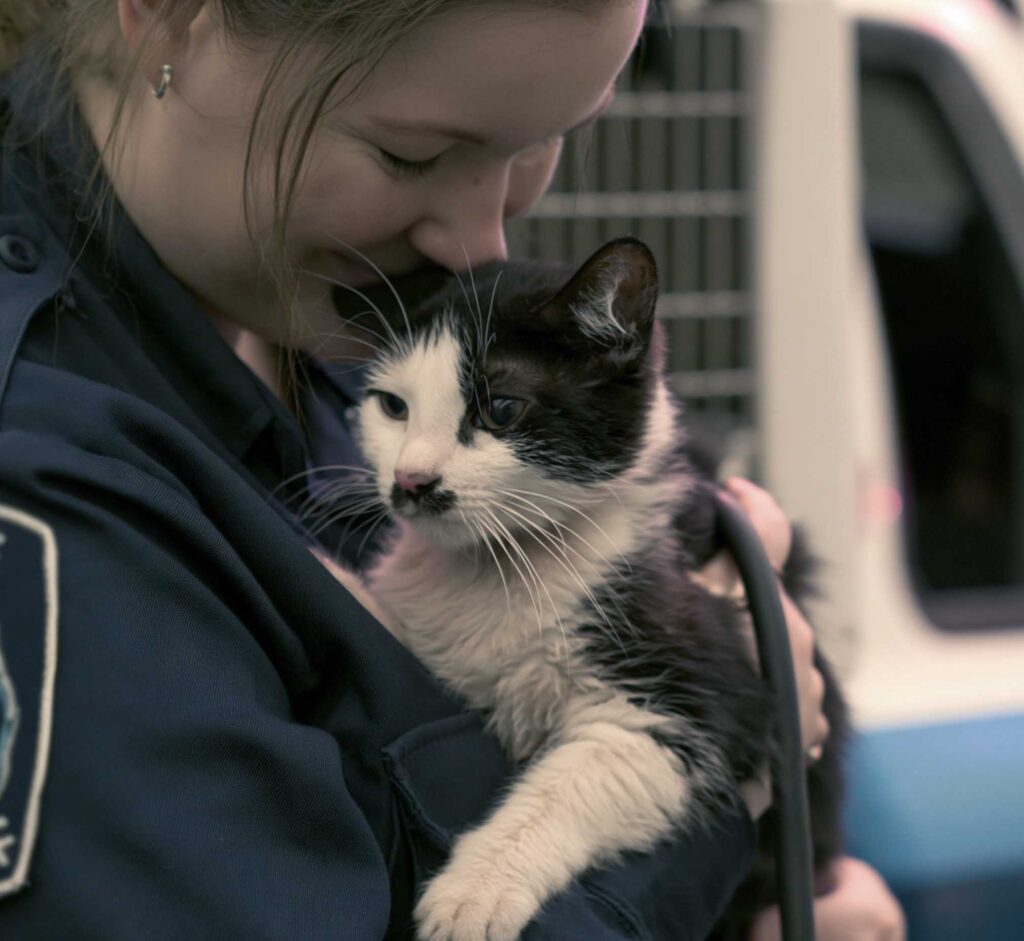
Social Compassion proposes an ongoing partnership with the City of Los Angeles to provide a dedicated team of four Community Humane Officers – Social Compassion’s title for court-confirmed Level 2 humane officers who would add to Los Angeles Animal Services’ (LAAS) field capacity under the existing Animal Control Officer Reserve Corps program.
The model is dual-purpose: the officers would investigate cruelty and enforce animal-protection laws, while also serving as community-based “social workers” for pet-owning households. When conditions are concerning but do not rise to criminal neglect or abuse, they would help families overcome barriers that place animals at risk – including unaffordable veterinary care, pet food insecurity, lack of transportation, limited knowledge of proper care, and difficulty accessing spay/neuter or licensing services.
The officers would protect animals, help responsible owners remain united with their pets, solve problems before they become cruelty or shelter-intake cases, & build trust between LAAS and the community.
Community Humane Officers would use a graduated, problem-solving approach. Every referral would be assessed for immediate animal risk, legal violations, and the owner’s ability and willingness to correct the problem. The response would match the facts: assistance and education where appropriate; documented compliance requirements and rechecks where necessary; and formal enforcement when animals remain endangered or laws are violated.
Community Support and Resource Navigation
• Listen to the owner, identify the root cause of the concern, and create a practical corrective-care plan.
• Connect families with nonprofit or low-cost veterinary clinics, charitable medical funds, mobile clinics, and transportation assistance.
• Connect households experiencing pet food insecurity with food banks, community pantries, delivery programs, and other nonprofit resources.
• Provide guidance on nutrition, sanitation, shelter, preventive care, medication, exercise, sterilization, licensing, and lawful breeding.
• Help owners complete referrals and applications rather than merely handing them a resource list.
• Conduct follow-up visits to confirm that care has improved and barriers have been resolved.
Humane-Law Investigation and Compliance
• Respond to LAAS-referred cruelty, neglect, breeding, licensing, and spay/neuter complaints.
• Conduct welfare checks, site inspections, interviews, follow-up visits, and compliance rechecks.
• Document animal condition, housing, food, water, sanitation, injuries, veterinary needs, and owner statements.
• Collect and preserve photographs, video, records, witness statements, and chain-of-custody information.
• Investigate repeat violations and prepare complete administrative or prosecutor-ready case files.
• Assist with lawful seizures and post-seizure documentation when urgent protection is required.
LAAS has a broad mandate and a large geographic workload. The Department oversees six shelters, of which only four are fully staffed, approximately 50,000 animals served annually, more than 20,000 emergency calls each year, and 40 Animal Control Officers covering 468.7 square miles and 3.9 million residents. This is a decrease from 68 officers in 2021. Those officers are responsible for emergency response, cruelty investigations, dangerous animals, permits, licensing, spay/neuter compliance, and other municipal-code enforcement. Based on the National Animal Care and Control Association recommendation of 1 officer per 18,000 residents, LAAS should employ an additional 200 officers.
• Many animal-welfare concerns are also human-resource problems. A person may care about an animal but lack money for treatment, transportation, food, stable housing, or basic pet-care knowledge. Resolving the underlying barrier can protect the animal more effectively than a warning alone.
• Emergency calls compete with sustained follow-up. Time-intensive investigations, resource coordination, compliance plans, and rechecks can be displaced by urgent calls and dangerous-animal response.
• Illegal and uncontrolled breeding drives future intake. Consistent education, verification, and enforcement of licensing, sterilization, and breeder requirements can prevent unwanted litters and reduce shelter pressure.
• Complex cruelty cases require dedicated case development. Hoarding, severe neglect, repeat offenders, illegal breeding, and multi-animal cases often require multiple visits, veterinary coordination, records review, and prosecutor-ready documentation.
• Public trust depends on meaningful assistance and visible follow-through. Residents are more likely to cooperate with LAAS when officers explain requirements, connect people to real help, return to confirm improvement, and take firm action when assistance is refused or animals remain at risk.
The community-support role is central to the success of the program. A resource-oriented field response demonstrates that LAAS is not arriving solely to punish or remove animals. It shows that the City is prepared to help people meet their responsibilities, preserve the human-animal bond when it is safe to do so, and reserve criminal enforcement for cases that warrant it.
• Fairer outcomes. The model distinguishes poverty-related hardship, knowledge gaps, and temporary crises from deliberate cruelty, chronic neglect, or refusal to correct dangerous conditions.
• Stronger neighborhood relationships. Consistent follow-up gives residents a known point of contact and demonstrates that reports are taken seriously and handled proportionately.
• Fewer preventable impounds and surrenders. Successful resource intervention can keep animals safely in their homes, reduce relinquishment, and conserve shelter space for animals that truly require placement.
• Greater legitimacy for enforcement. When the City first offers reasonable pathways to compliance, decisive enforcement against ongoing abuse, illegal breeding, and repeat violations is easier for the public to understand and support.
After completing all statutory training and court-confirmation requirements, a Level 2 Humane Officer may, within the course and scope of appointment:
• Make arrests for violations of California penal laws relating to or affecting animals after completing Penal Code section 832 police-powers training;
• Serve search warrants, with prior notice to local law enforcement; • use reasonable force necessary to prevent cruelty, under approved policy;
• Take possession of or immediately seize animals when California law requires prompt action to protect animal or public health and safety; and
• Work with LAAS, law enforcement, veterinarians, and prosecutors to preserve evidence and support criminal or administrative proceedings.
Community Humane Officers would be unarmed and are not general peace officers. They would not conduct independent high-risk warrant entries, operate outside LAAS-approved assignments, or represent themselves as City police officers. Any arrest, warrant service, seizure, or use of force would be governed by law, written policy, supervision, and required coordination with local law enforcement.
• Help the community care for animals successfully. Resource navigation addresses veterinary, food, transportation, and knowledge barriers before they become irreversible welfare crises.
• Protect animals sooner. Dedicated follow-up can identify worsening neglect, secure needed treatment, and interrupt ongoing cruelty before conditions become catastrophic.
• Build trust in City services. A balanced approach combines practical assistance, clear expectations, documented follow-through, and proportionate enforcement.
• Reduce preventable shelter intake. Sterilization, licensing, breeding oversight, early intervention, and owner support address upstream causes of unwanted litters, abandonment, and surrender.
• Preserve City officer capacity for emergencies. The contracted team can absorb selected investigations, resource-intensive cases, and compliance follow-up while City Animal Control Officers remain available for urgent calls.
• Improve case quality and accountability. Standardized evidence collection, supervisory review, rechecks, and outcome tracking strengthen enforcement and public transparency.
|
CONTRACT RELATIONSHIP |
An ongoing professional-services agreement administered by LAAS, subject to the City’s standard contracting, appropriation, performance-review, and renewal requirements. |
|
STAFFING |
A dedicated team of four Community Humane Officers, with staffing adjustments available by mutual agreement as workload and funding evolve. |
|
LAAS’ ROLE |
Set priorities; approve assignments and protocols; coordinate dispatch, records access, shelter placement, administrative processes, and prosecutor referrals; designate a City liaison. |
|
SOCIAL COMPASSION’S ROLE |
Recruit, employ, train, and maintain court confirmation and continuing compliance for each officer; maintain nonprofit-resource partnerships; provide case management guidance and regular reporting. |
|
DEPLOYMENT MODEL |
Referral- and assignment-based work, with geographic or subject-matter priorities selected by LAAS. Officers would combine enforcement, education, resource navigation, and documented follow-up. |
|
COMMUNITY RESOURCE NETWORK |
Social Compassion would maintain current relationships with veterinary providers, pet food programs, spay/neuter services, transportation resources, animal-care educators, and other nonprofit partners. |
| RISK CONTROLS | Background investigations, statutory training, body-worn-camera and evidence policies, complaint and incident review, City-approved identification, |
The program will be managed through transparent, jointly defined service standards and regular reporting, including:
• Number and type of LAAS-referred cases accepted, completed, and pending;
• Response times, follow-up intervals, inspections, rechecks, and documented corrections;
• Owners connected with veterinary care, pet food, transportation, spay/neuter, licensing, or other support services; •
Resource referrals successfully completed and animals safely maintained in their homes;
• Licensing, spay/neuter, breeder, permit, and transfer violations identified and resolved;
• Cruelty cases referred for administrative action or prosecution and acceptance outcomes;
• Animals protected, treated, or lawfully removed from dangerous conditions;
• Repeat-complaint rates, verified compliance, preventable surrenders or impounds avoided, and shelter-intake impact; • Hours of City Animal Control Officer capacity preserved for emergency and priority response; and
• Community complaints, commendations, cooperation rates, and customer-service outcomes.